
Hinweis: Dieser Artikel ist nur auf Englisch verfügbar.
A Leash is Not a Prison: How to Make Leashed Walks an Exciting Adventure for Your Dog
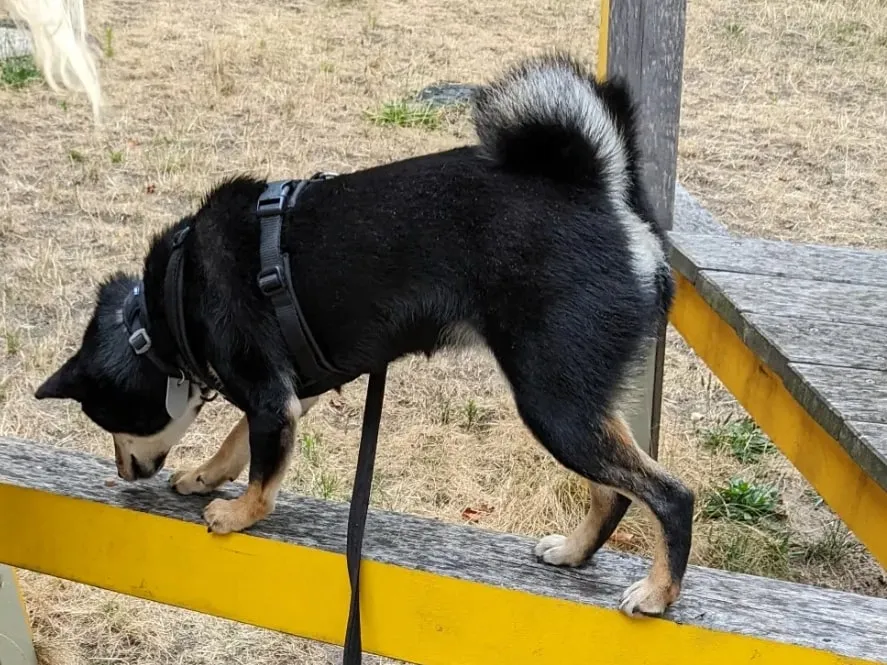
There is a huge misconception out there that a dog can only be fulfilled and “free” when they are completely off-leash. It creates this massive pressure on dog owners to unclip the line as fast as possible!
But what if total off-leash freedom isn’t always an option? Whether you have a reactive dog who needs a safety net, a pup navigating strict local leash laws (like here in Berlin), or a dog struggling with high prey drive — off-leash isn’t always safe or possible.
This is especially true for dogs that constantly chase birds and squirrels, or those “ball junkies” who get hyperactive, overexcited, and obsessively chase a ball without even returning it. When these dogs are off-leash, they easily get lost in a spiral of intense emotions and spiking adrenaline. Keeping them safely on a leash during walks isn’t a punishment — it’s an essential tool to help them slow down, switch from a frantic impulse mode into a cognitive mindset, and learn how to navigate the world calmly alongside you.
Does being on a leash mean your dog is doomed to be unhappy? Absolutely not!
A leash doesn’t have to be a prison. When you pair a line with the right technique, it becomes a bridge of communication, not a tool of restriction. Your dog can still sniff deeply, explore, and feel a deep sense of autonomy. It all comes down to HOW you handle the leash.
Why Joint Activities on the Leash Matter
High-intensity physical exercise alone often keeps a dog’s adrenaline levels soaring. That’s why structured engagement and mental stimulation during walks are so important.
By implementing a few simple, interactive activities into every walk, you can transform ordinary outings into thrilling adventures that keep your dog engaged and focused on you. When you make yourself the ultimate source of excitement and reward, your dog will naturally look forward to spending time with you.
Joint activities matter because they:
- Strengthen your bond: Shared experiences create a deeper connection and mutual trust between you and your dog.
- Stimulate their mind: Engaging exercises keep your dog mentally sharp, calm, and fulfilled.
- Improve focus & emotional balance: Working together reinforces positive behaviors, teaching your dog how to disengage from environmental triggers.
- Build confidence & body awareness: Problem-solving together helps timid or overwhelmed dogs feel secure.
What If Your Dog Keeps Pulling and Pulling?
“Okay,” you might think, “what if I try all these activities and my dog still pulls on the leash like a freight train?”
First of all, take a deep breath: pulling on the leash is not a failure. It doesn’t mean your dog is “broken” or that leashed walks won’t work for you. In the beginning, pulling simply means your dog is overwhelmed by the environment or hasn’t yet realized that the most exciting thing on the walk is actually you.
The key is a mindset shift: instead of fighting the tension, position yourself as your dog’s curious, creative partner. When you show your dog that you are actively interested in exploring the world with them — bringing the best games, hidden treasures, and engaging challenges — their focus naturally shifts back to you. They stop pulling towards the environment because they realize that being close to you is where all the real fun happens!
Managing Triggers & Environmental Pulling
Some dogs always want to greet people and other dogs very energetically, pulling towards them on the leash and getting frustrated if they aren’t allowed to do so.
If your dog pulls on the leash when seeing a stimulus, the key is distance and alternative activities:
- Increase the Distance: Don’t get too close to the trigger. Let your dog observe others from a comfortable, safe distance where they can still think clearly.
- Offer Fun Alternatives: Engage your dog in interesting tasks — try a quick treat search, ask for a simple trick, or encourage them to try some doggy parkour.
- Reward Calm Focus: As soon as your dog calms down and focuses on you, they may be able to approach or move closer. If they continue to pull, simply increase the distance again and suggest another alternative activity.
Thanks to this approach, your dog learns that seeing a stimulus doesn’t mean they have to rush towards it immediately — instead, they can do something fun with their human!
Fun & Interactive Activity Ideas for Leashed Dogs
If your dog needs to burn energy while staying safely on the line, you can combine body and mind exercises into one. Here are great ideas you can easily try on a long leash in safe areas:
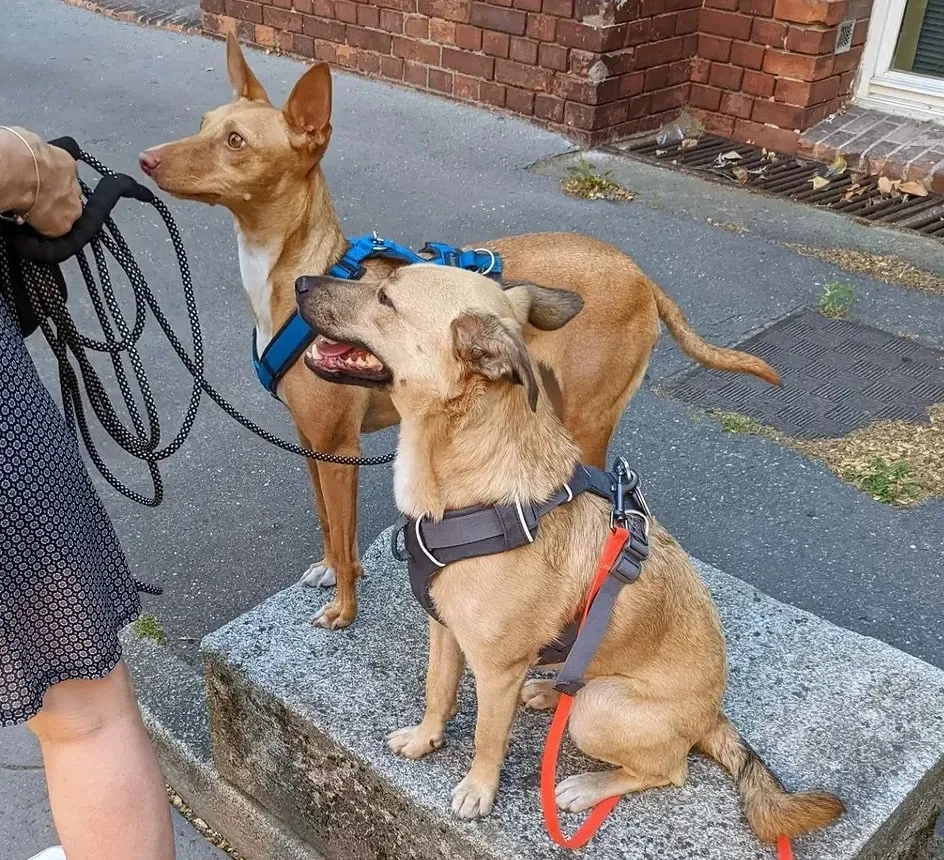
- Nose Work & Scent Games: Hide-and-seek with treats in tree trunks, searches in the grass, hiding behind bushes, or tracking lost toys.
- Doggy Parkour & Agility: Simple exercises like jumping onto obstacles, navigating a slalom around trees, walking on benches, or going through tunnels.
- Body Awareness & Sensory Integration: Walking on different textures builds balance, coordination, and mental well-being.
- Trick Training: Teaching simple tricks like “turn around”, “high five”, or “hand touch” keeps your dog in a cognitive mindset rather than jumping into hectic emotional responses. It’s a fantastic tool to redirect focus and balance their emotions.
- Impulse Control & Simple Obedience: Practicing stay, wait, or recall on a long line, alongside 8-shaped movements and slalom walking.
Safe & Fun Surfaces for Sensory Integration
When introducing your dog to different textures, always make sure the surfaces are safe, non-slippery, and that there are no gaps where small paws could fall through, get stuck, or hurt!
Here are great ideas for everyday surface exploration:
- Gentle Metal & Urban Textures: Fine-mesh metal grates (with tiny gaps so paws never catch!), low manhole covers, tactile paving slabs, or smooth concrete.
- Natural Wood & Bark: Tree trunks, fallen logs, wooden boardwalks, wood chips, pinecones, and dry tree bark.
- Soft & Unstable Ground: Deep sand, soft moss, thick mud, wet grass, piles of autumn leaves, or small gravel/pebbles.
- Textured Everyday Objects: Rubber doormats, yoga mats, artificial turf, low plastic platforms, or shallow water.
The True Meaning of Leash Work: Building Connection & Trust
If you ever feel that keeping your dog on a leash is limiting or unfair, shift your perspective. Working on a leash is one of the most powerful ways to build a true, lasting connection. It allows you to work directly with your dog’s emotions, teaching both of you how to listen, understand, and communicate with each other on a deeper level.
Over time, the leash transforms into an invisible thread. You learn to read each other’s body language, build closeness, and navigate the world as a synchronized team. In fact, through this meaningful leash work, your dog gradually learns to choose to stay close to you — not because they are restricted, but because being with you is the best place to be. Eventually, unclipping the leash becomes just an option, because the real bond has already been built.
A dog on a leash isn’t an unhappy dog — a dog on a leash is a dog engaged in a rich, loving dialogue with their human!
Want to Learn More?
I’m currently creating my online Leash Skills Course — it will be ready in 2027!
But you don’t have to wait! If you’re struggling with leash walks right now, my online 1:1 consultations are fully open. Let’s find solutions for your doggo together!
Send me an email or get in touch through my Contact page to book your session!